
WELCOME BONUS 300%
UP TO €2000 + 100
FREE SPINS
UP TO €2000 + 100
FREE SPINS
Home → Blackjack
Blackjack at Wonaco Casino: Variants, Rules and Payouts
Which rule variants does the software show?
Blackjack 6 Decks presents a 99.54% RTP with a 0.46% house edge, featuring standard rules like the dealer standing on Soft 17 and Double After Split (DAS) allowed. This specific variant emphasizes a 3:2 payout for a natural blackjack, providing a more favourable outcome for players compared to 6:5 payouts. The strict adherence to basic strategy is recommended for achieving the stated RTP.
A notable rule modification is Blackjack Surrender, which allows players to forfeit half their stake after the dealer checks for blackjack, potentially improving the RTP by approximately 0.08 percent points. While Late Surrender offers a marginal benefit, early surrender, if available, can significantly reduce the house edge by up to 0.6 percent points.
The impact of payout ratios is significant, with a 6:5 blackjack payout reducing the RTP to 98.15%, increasing the house edge by 1.39 percentage points compared to a 3:2 payout. A $10 bet yielding a $12 payout instead of $15 fundamentally alters the game's long-term mathematical expectation.
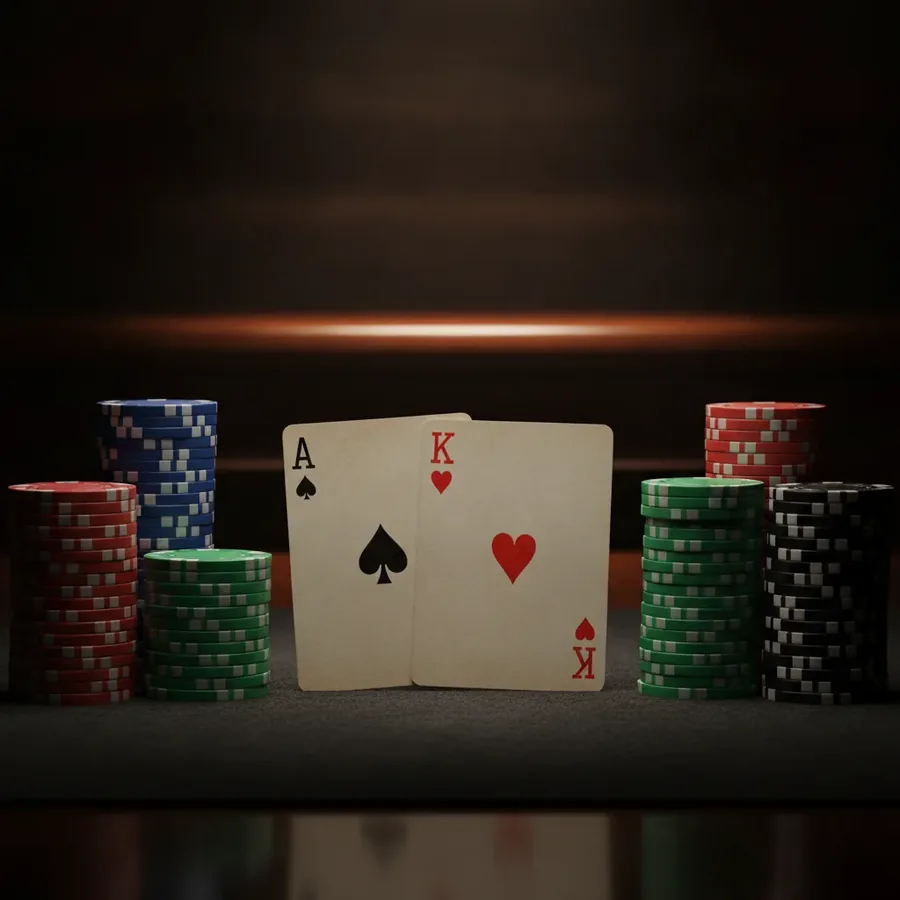
Card Counting at Shuffle Master Table: why it fails
Shuffle Master tables, often employing multiple decks and continuous shuffling machines, render traditional card counting ineffective. The constant re-shuffling means the composition of the deck changes rapidly, preventing a card counter from accurately tracking the ratio of high to low cards remaining. This continuous randomization is the primary reason card counting strategies fail.
The RTP for Quantum Blackjack Plus Live is listed at 99.57% with optimal strategy, and Infinite Blackjack at 99.47%. These figures are for the base game and do not account for the special features or side bets that can alter the overall return to player. The house edge is inherently higher on these additional betting options.
Live dealer games like Blackjack Party offer a different environment, focusing on entertainment with two hosts, but the underlying game mechanics and house edge remain consistent with standard blackjack rules unless specific variants are introduced. The bet limits for live tables range from 1 EUR to 5,000 EUR, accommodating a wide spectrum of players.
Bet two percent of bankroll per hand
A prudent approach to managing a bankroll at live blackjack tables, such as those offered by Playtech or Evolution, involves betting no more than two percent of the total available funds per hand. For instance, with a bankroll of €2,000, this guideline suggests a maximum bet of €40 per hand to maintain longevity.
This strategy is particularly relevant when considering the bonus terms, which offer a 300% welcome bonus up to €2,000. Players aiming to meet wagering requirements, which are typically 10% for table games, should carefully manage their bet sizes to avoid depleting their bankroll prematurely. For example, a €100 bonus requires €1,000 in turnover for table games if the wagering is x10.
The various blackjack variants, like Infinite Blackjack with its unlimited seats and four side bets, or Quantum Blackjack Plus Live with multipliers up to 1,000x on specific hands, can entice larger wagers. However, adherence to a strict bankroll management plan, such as the two percent rule, is crucial for sustained play across these diverse offerings.
Soft Hand and Hard Hand Practically Distinguished
In blackjack, a soft hand contains an Ace counted as 11, offering flexibility, whereas a hard hand does not, or has an Ace counted as 1. For example, an Ace and a 6 form a soft 17 (A+6), but if a player draws a 7 to a soft 17 (A+6+7), the hand becomes a hard 14 because the Ace must now be counted as 1 to avoid busting.
The distinction is critical when the dealer hits on soft 17 (H17), a rule that increases the house edge by 0.22 percentage points. A player with a soft 17 is in a different strategic position than a player with a hard 17, influencing the optimal decision for hitting, standing, or doubling down, especially against a dealer's upcard.
Understanding these hand types is fundamental to applying basic strategy, especially in variants like Blackjack 6 Decks where the RTP is 99.54%. For instance, against a dealer's upcard of 7, a player holding a soft 18 (Ace and 7) should stand, whereas holding a hard 18 (e.g., 9 and 9) might necessitate a hit depending on specific table rules.
Register Late Surrender correctly in three steps
To correctly register Late Surrender, the first step is to identify the specific rule within the game variant being played. This rule allows a player to forfeit half their bet after the dealer has checked for blackjack, but only if the dealer does not have blackjack. This option is distinct from early surrender, which can be taken before the dealer checks.
The second step involves assessing the hand's strength and the dealer's upcard. If the probability of winning the hand is significantly low, and the option to surrender is available, surrendering becomes a mathematically sound decision. For example, a hand like hard 16 against a dealer's 10 is a classic scenario where surrender is often advised.
The third and final step is to declare the intention to surrender before taking any other action, such as hitting or splitting. By correctly applying Late Surrender, players can mitigate losses in unfavorable situations, effectively reducing the house edge. This rule modification can improve the RTP by approximately 0.08 percent points in certain blackjack variants.
Blackjack variants at a glance
| Variant | Payout | House edge | Rule | Bet range |
|---|---|---|---|---|
| Blackjack Insurance / Versicherung (6–8 Decks) | 92.53% | 7.47% | Separate Nebenwette bis 50% der Hauptwette, wenn der Dealer ein Ass hat. Basisstrategie schreibt IMMER Ablehnung vor (außer Karten zählen bei True Count ≥ +3). Bei einem Deck Vorteil ≈ 5.88% | Insurance 2:1 |
| Blackjack Auszahlung 6:5 statt 3:2 (6 Decks) | 98.15% | 1.85% | Ersatz von 3:2 durch 6:5 fügt exakt +1.39 Prozentpunkte zum Vorteil des Casinos hinzu – stärker als jede andere Regeländerung. Bei $10 Einsatz zahlt Blackjack $12 statt $15. | Blackjack 6:5, Gewinn 1:1 |
| Blackjack Split / Double / H17 – Regel-Effekte | n.a. (Regel-Modifikatoren) | H17 +0.22 Prozentpunkte; RSA −0.08 Prozentpunkte; DAS −0.14 Prozentpunkte | Dealer Hits Soft 17 verschlechtert RTP um 0.22 Prozentpunkte; Resplit Aces verbessert um 0.08 Prozentpunkte; Double After Split verbessert um ca. 0.14 Prozentpunkte; 6 Decks statt 8 – ca. 0.02 Prozentpunkte. | Double – Einsatz ×2 mit einer Karte; Split – bis 4 Hände; Ass-Split meist mit einer Karte. |
| Blackjack 6 Decks, S17, DAS, DOA, Auszahlung 3:2, Basisstrategie | 99.54% | 0.46% | Dealer steht auf Soft 17; Verdopplung auf jeder Zweierkarte; Verdopplung nach Split erlaubt; keine Aufgabe. Basisstrategie ist für diesen Wert zwingend | Blackjack 3:2, normaler Gewinn 1:1, Insurance 2:1 |
| Blackjack Liberal Vegas Strip (liberale Regeln, 3:2) | 99.72% | 0.28% | Günstigste Regelkombination: S17 + DAS + Resplit + Late Surrender. Standardabweichung 1,15 | Blackjack 3:2, Gewinn 1:1 |
| Blackjack Ein Deck, klassische Regeln, 3:2 | 99.85% | 0.15% | Weniger Decks = niedrigerer Vorteil; ein Deck gibt ca. −0.48 Prozentpunkte gegenüber 8 Decks. Oft durch 6:5 Auszahlung kompensiert. | Blackjack 3:2, Gewinn 1:1 |
Blackjack Party runs with two hosts
Blackjack Party, provided by Evolution, creates an engaging atmosphere with the presence of two hosts. This live dealer game offers a distinct social element beyond standard blackjack. The interaction between the hosts and players aims to enhance the overall entertainment value during gameplay.
The wagering limits for Blackjack Party are set from 1.00 EUR to 1,000 EUR. This range caters to a broad spectrum of players, from casual participants to those with more substantial bankrolls. The higher end of the limit allows for more significant betting within a single round.
A minimum deposit of 20 EUR would allow a player to engage in several rounds of Blackjack Party, depending on their betting strategy. For instance, betting 1 EUR per hand would permit up to 20 hands, providing a sustained play session. This contrasts with higher-stakes tables.
Continuous Shuffling Machine shuffles after each round
The use of a Continuous Shuffling Machine (CSM) in some blackjack variants ensures that cards are shuffled after every round. This system is designed to prevent card counting by constantly reintroducing cards into play. Games employing a CSM typically have a slightly higher house edge compared to traditional shoe games.
While the provided data does not explicitly list a CSM for Quantum Blackjack Plus Live or Infinite Blackjack, it is a common feature in modern live dealer blackjack to maintain game integrity and speed. The RTP for Quantum Blackjack Plus Live is 99.57% with optimal strategy, indicating a low house edge.
The implementation of a CSM directly impacts a player's ability to track cards, making traditional card counting strategies ineffective. This feature is primarily aimed at ensuring fairness and consistent game flow, particularly in high-volume live dealer environments. The RTP for Infinite Blackjack is 99.47%.
Shoe, Cut Card, and 75 Percent Penetration
Standard blackjack games are often dealt from a shoe containing multiple decks, typically six to eight, and utilize a cut card. This cut card indicates when the shoe will be reshuffled, usually after approximately 75 percent of the cards have been dealt. This method is a compromise between game speed and card counting difficulty.
Blackjack variants like 'Blackjack Ein Deck' offer a significantly lower house advantage of 0.15% due to the reduced number of decks. However, the presence of a cut card and the overall penetration rate still influence the game's dynamics and the effectiveness of advanced strategies. The RTP for this variant is 99.85%.
A 75 percent penetration rate means that the cut card is placed around three-quarters of the way through the shoe. This ensures that a substantial portion of the cards is played before reshuffling, which can be relevant for players employing betting systems that rely on card distribution. This is a common practice across many live dealer blackjack tables.
Which table limits suit 20 EUR balance?
A 20 EUR balance is most suitable for live blackjack tables with low minimum bet limits. Blackjack Party, for instance, has a minimum bet of 1.00 EUR, allowing for up to 20 hands with the entire balance. This provides a reasonable duration of play for casual participants.
Infinite Blackjack and Quantum Blackjack Plus Live both have a minimum bet of 1 EUR, making them viable options for a 20 EUR balance. With a 1 EUR bet, a player could theoretically play 20 hands at either of these tables. The RTP for Infinite Blackjack is 99.47%, and for Quantum Blackjack Plus Live, it is 99.57%.
Tables with higher minimum bets, such as some standard blackjack games which might start at 5 EUR or 10 EUR, would deplete a 20 EUR balance very quickly. For example, a 10 EUR minimum bet would only allow for two hands, offering limited gameplay. Players should always check the table limits before joining.
Splitting Eights vs Standing on 16
In blackjack strategy, splitting a pair of eights is generally recommended, especially against dealer upcards of 7 or higher. This is because a hand totaling 16 is statistically weak, and two hands of eight offer a better chance of forming stronger totals. The RTP for Blackjack Liberal Vegas Strip is 99.72%.
Standing on a hard 16 against a dealer's upcard of 7, 8, 9, 10, or Ace is typically a losing proposition. The probability of busting by hitting is significant, but the probability of the dealer achieving a better hand than 16 is also high. This decision point is critical for minimizing the house edge.
The strategy for dealing with a hard 16 or a pair of eights is fundamental to basic blackjack strategy, aiming to optimize the player's return. While specific rule variations like 'Blackjack 6 Decks' with an RTP of 99.54% can slightly alter optimal play, the core principles regarding eights and 16 remain consistent.
Splitting costs double bet: plan budget
Splitting a hand in Blackjack Split / Double / H17 means the initial bet is doubled, as each new hand requires a full wager. This rule modification, when applied to a pair of Aces, allows for a resplit, potentially increasing the number of hands played significantly. The RTP remains unaffected by this specific rule, but the potential outlay per round increases.
This doubling of the bet per split hand directly impacts the player's session budget. For example, a player betting €10 per hand who splits a pair of Aces would then be wagering €20 across two hands, potentially €30 or €40 if further splits are permitted. Careful budget management is therefore essential for players utilizing this option.
The ability to Double After Split (DAS) further amplifies the strategic and financial considerations. While DAS can improve RTP by approximately 0.14 percentage points, it also means that a player could commit a larger total bet across multiple hands after splitting. Understanding these financial implications is crucial before engaging with these variant rules.
Surrender vs Playing Out on 16 vs 10
Blackjack Surrender (Late Surrender) offers players the option to forfeit half their bet after the dealer checks for blackjack, losing the other half. This rule can improve RTP by approximately 0.08 percentage points, providing a tactical way to mitigate losses on unfavorable hands. The payout for surrendering is 50% of the original stake.
In a scenario where a player holds a hard 16 and the dealer shows a 10, playing out the hand typically leads to a high house advantage. While specific RTP figures for this exact situation are not provided, late surrender presents a quantifiable alternative to risking the full bet. Early surrender, though rare, offers a more substantial RTP improvement of up to 0.6 percentage points.
The decision between surrendering and playing out a hand like 16 against a dealer's 10 is a core strategic choice. Late Surrender, a feature available in some Blackjack variants at Wonaco Casino, allows for a predetermined loss rather than a potentially larger one if the dealer has a strong hand. This rule is distinct from insurance, which is a side bet.
What Hole Card Means at a Live Table
At a live dealer table like Infinite Blackjack from Evolution, understanding the dealer's hole card is fundamental to player decisions. This is particularly relevant when the dealer's upcard is an Ace, triggering the availability of the Insurance side bet. Insurance pays 2:1, but has a high house edge of 7.47% in typical 6-8 deck games.
The dealer's hole card directly influences the probability of busting or achieving a blackjack. For instance, if the dealer shows a 10-value card, the chances of them having a blackjack are increased. This information is crucial for players deciding whether to split, double down, or even surrender in variants that allow it.
The presence of a hole card is a standard feature across most live blackjack variants, including Quantum Blackjack Plus Live by Playtech and Blackjack Party by Evolution. While not all variants explicitly mention the hole card reveal, its implication remains consistent: it forms the basis of the dealer's final hand and impacts player strategy and side bet eligibility.
Split, Double Down, and Surrender in Numbers
In Blackjack Split / Double / H17, the 'Double' option allows players to double their bet on any two-card hand, receiving only one more card. Splitting allows a player to turn a pair into two separate hands, with each hand receiving a new card and requiring a bet equal to the original stake. These actions are core to strategic play.
Variants like Blackjack 6 Decks, S17, DAS, DOA offer specific rules: Double After Split (DAS) allows doubling down after a split, and Double on Any Two cards (DOA) is standard. The RTP for Blackjack 6 Decks is 99.54%, with a house edge of 0.46%, assuming optimal strategy. These rules significantly influence the game's mathematical properties.
The 'Surrender' option, as seen in Blackjack Surrender (Late Surrender), provides a way to cut losses. This rule improves RTP by approximately 0.08% by allowing players to forfeit half their bet after the dealer checks for blackjack. While less impactful than early surrender, it offers a defined risk management tool with a 50% stake return.
Set session stop after 30 percent loss
Implementing a session stop after a 30 percent loss is a responsible gambling measure. For a starting bankroll of €100, this would mean ceasing play once a loss of €30 has occurred, leaving €70. This strategy helps to prevent significant financial depletion during a single gaming session.
This pre-defined loss limit is independent of game RTP or house edge. For example, a game with a 99.57% RTP like Quantum Blackjack Plus Live from Playtech still carries inherent risk. The 30% stop-loss is a personal financial control, not a game mechanic, and applies across all table games, including Infinite Blackjack with its 99.47% RTP.
Adhering to a 30 percent loss limit ensures that a substantial portion of the initial bankroll remains intact. This approach is crucial for maintaining long-term engagement with online casinos like Wonaco Casino, preventing single sessions from causing undue financial strain. This applies regardless of the bonus terms, such as the 300% welcome bonus up to €2,000.
Contact
Live - online chat
Banking









Providers












Wonaco Casino 2026